
As Ghana continues to invest in infrastructure, commercial developments, and industrial facilities, sustainability has become an increasingly important consideration in the construction sector. While cost, quality, and timely delivery remain essential, project owners are also placing greater emphasis on environmental responsibility, resource efficiency, and long-term performance.
This shift is changing how construction companies in Ghana plan and execute projects. Sustainable construction is no longer viewed as an optional initiative. It has become an important strategy for delivering infrastructure that supports economic growth while reducing environmental impact.
The concept extends beyond using environmentally friendly materials. It involves making informed decisions throughout the entire project lifecycle, from planning and design to construction and maintenance, ensuring that buildings and infrastructure remain efficient, resilient, and valuable for decades to come.
Understanding Sustainable Construction
Sustainable construction refers to the practice of designing and delivering projects in a way that minimizes environmental impact while maximizing economic and social value. The objective is to create infrastructure that uses resources efficiently, performs reliably throughout its lifespan, and contributes positively to surrounding communities.
For modern construction companies in Ghana, sustainability involves balancing engineering excellence with responsible resource management. This includes reducing material waste, improving energy efficiency, managing water resources effectively, and selecting construction methods that minimize disruption to the environment.
Rather than focusing solely on immediate project delivery, sustainable construction encourages a long-term perspective that benefits both clients and future generations.
The Growing Importance of Sustainability in Ghana
Rapid urbanisation, industrial expansion, and increasing investment in public infrastructure have created new opportunities for Ghana’s construction industry. At the same time, these developments have highlighted the importance of building responsibly.
Government institutions, multinational organisations, and private developers are increasingly seeking contractors who understand sustainable construction principles. Many projects now include environmental considerations during procurement, making sustainability an important factor in contractor selection.
This trend reflects a broader recognition that well-planned infrastructure should not only meet today’s requirements but also remain functional, efficient, and environmentally responsible throughout its service life.
Sustainable Practices Transforming Construction
Sustainability in construction is achieved through a combination of planning, engineering, and operational discipline. Rather than relying on a single solution, successful projects integrate multiple practices that improve both environmental and project performance.
One important approach is efficient material management. Careful planning reduces unnecessary waste while ensuring that materials are used effectively throughout construction. This not only reduces environmental impact but also contributes to better cost control and improved project efficiency.
Energy efficiency also plays a significant role. Modern buildings increasingly incorporate systems and designs that reduce energy consumption during operation, lowering long-term operating costs while supporting environmental objectives.
Water conservation has become another important consideration, particularly for industrial and commercial developments. Effective drainage systems, responsible water management, and efficient construction processes help reduce unnecessary consumption while protecting surrounding environments.
Innovation and Technology in Sustainable Construction
Technology continues to reshape how construction projects are planned and delivered. Digital engineering tools, project management platforms, and advanced surveying technologies allow contractors to improve accuracy while reducing unnecessary rework and material waste.
Building Information Modelling (BIM), drone surveys, digital site monitoring, and modern project management software enable engineering teams to make informed decisions throughout construction. These technologies improve coordination between disciplines, enhance quality control, and support more efficient use of resources.
For Ghanaian contractors, adopting these technologies represents an important step toward delivering projects that meet international standards while remaining cost-effective.
The Role of Contractors in Delivering Sustainable Infrastructure
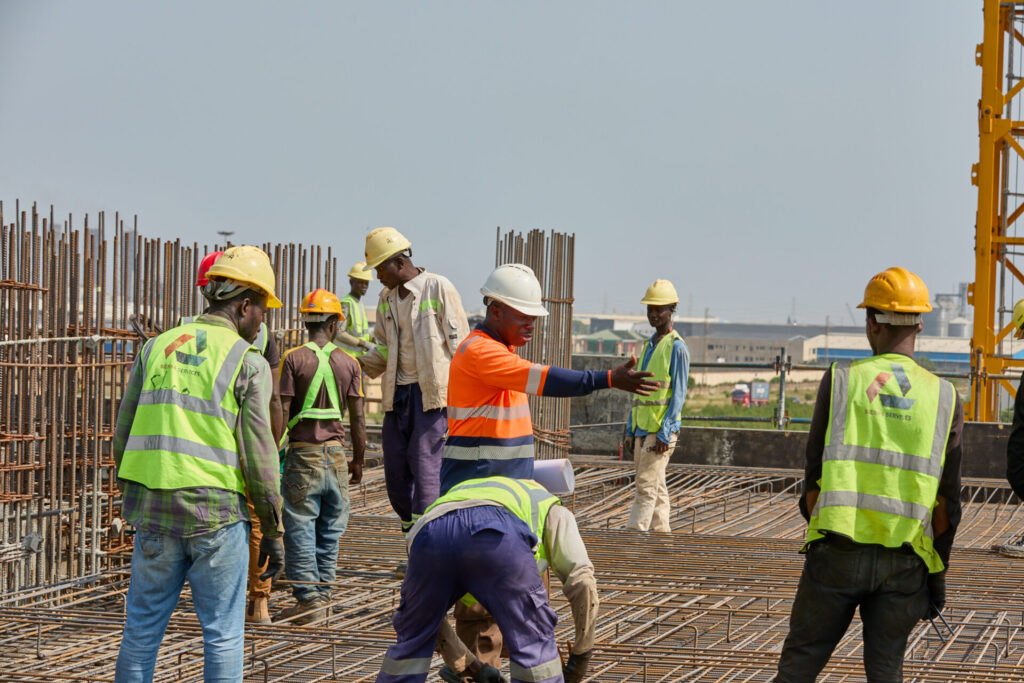
Achieving sustainability requires collaboration between clients, consultants, engineers, and contractors. While project owners establish objectives, contractors play a critical role in translating those goals into practical outcomes on site.
Leading Ghanaian contractors contribute by implementing structured construction processes, maintaining quality standards, managing environmental risks, and ensuring that engineering decisions support long-term project performance.
This collaborative approach helps create infrastructure that is durable, efficient, and capable of supporting future development across sectors such as transportation, healthcare, education, energy, and commercial real estate.
Building for Long-Term Value
Sustainable construction is ultimately about creating value that extends well beyond project completion. Well-designed infrastructure requires less maintenance, operates more efficiently, and adapts more effectively to changing demands over time.
As Ghana’s infrastructure continues to expand, the adoption of sustainable construction practices will play an increasingly important role in ensuring that new developments remain resilient, environmentally responsible, and economically beneficial.
Construction companies in Ghana that embrace innovation, engineering excellence, and responsible project delivery will continue to shape the country’s built environment while contributing to a more sustainable future.
Conclusion
The future of construction extends beyond delivering projects on time and within budget. It involves creating infrastructure that balances technical excellence with environmental responsibility and long-term performance. As sustainability becomes a defining factor in modern development, construction companies in Ghana have an opportunity to lead by adopting practices that improve efficiency, reduce environmental impact, and deliver lasting value.
By integrating sustainable principles into every stage of project delivery, Ghanaian contractors can help build infrastructure that supports economic growth while preserving resources for future generations.
Looking for an engineering and construction partner committed to delivering quality infrastructure? Explore our projects or contact our team to learn how structured planning, engineering expertise, and responsible construction practices contribute to successful project outcomes.